From Resume to Interview - How AI Can Support the Entire Job Search
By Carlos Idriss
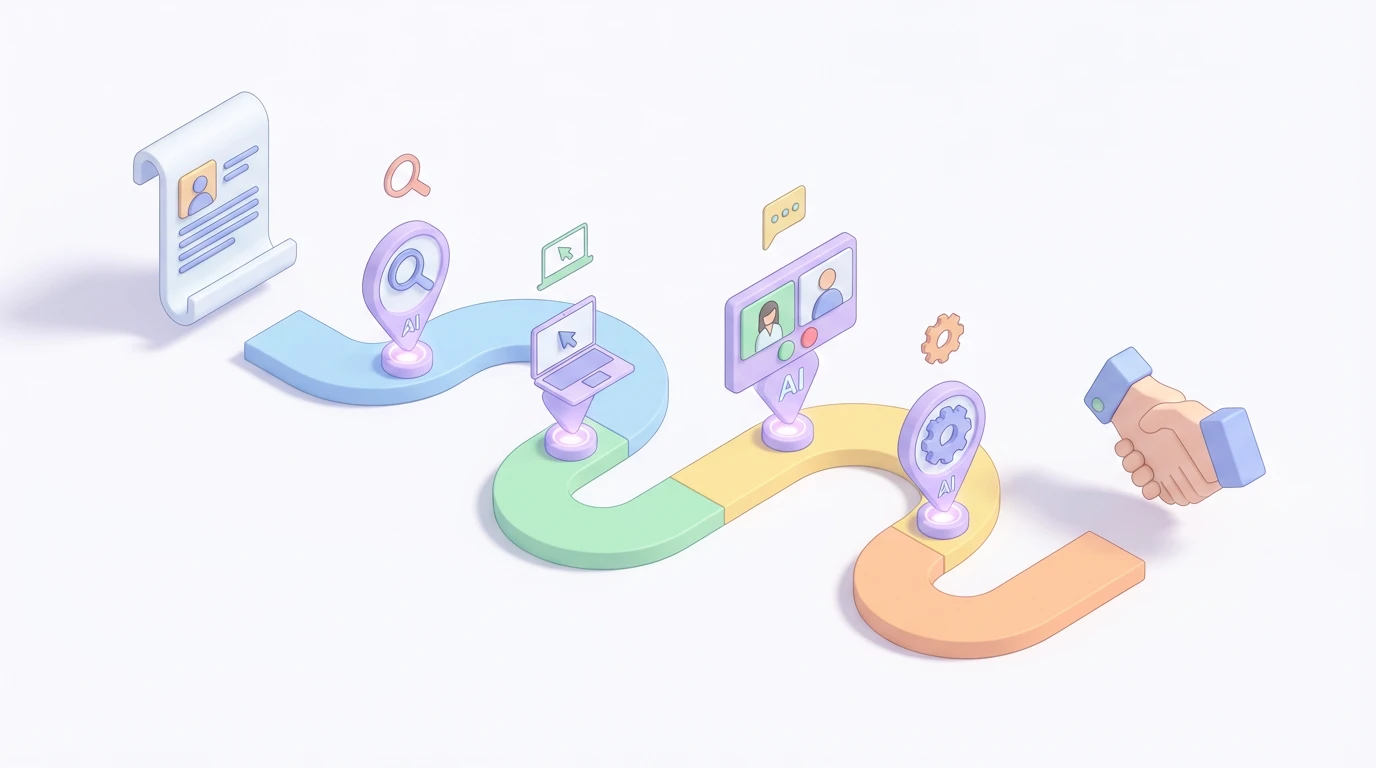
Job Search Is a Multi-Stage Process
Most job seekers think of AI as a resume optimization tool. While that's valuable, it's only one piece of the puzzle. A successful job search involves multiple distinct stages, each with unique challenges where AI can provide targeted support.
Understanding how to leverage AI across the entire journey—from initial job discovery to final negotiations—can dramatically improve both your efficiency and results.
Stage 1: Job Discovery and Target Selection
The Challenge
Finding the right opportunities in a sea of job postings. Most people either miss relevant roles or waste time on poor-fit positions.
How AI Helps
Intelligent Job Matching AI-powered platforms can analyze your background and preferences to surface roles you might not have considered but are well-suited for.
Company Research Aggregation AI tools can compile company information, recent news, funding rounds, and culture indicators across multiple sources, saving hours of manual research.
Salary and Market Intelligence AI can analyze compensation data to help you understand market rates for your role and experience level in specific locations.
Best Practices
- Use AI to cast a wider initial net, then manually filter for genuine interest
- Don't blindly trust AI recommendations—verify cultural fit yourself
- Combine AI discovery with traditional networking for best results
Stage 2: Application Materials Creation
The Challenge
Creating tailored, ATS-friendly resumes and compelling cover letters for each application without spending hours per job.
How AI Helps
Resume Optimization
- Scans job descriptions for keywords and required skills
- Identifies formatting issues that confuse ATS systems
- Suggests how to reorder and emphasize relevant experiences
- Generates multiple resume versions for different role types
Cover Letter Drafting
- Creates initial drafts incorporating job requirements and your background
- Suggests company-specific details to include
- Provides structure and talking points
Skills Gap Analysis
- Compares your qualifications against job requirements
- Highlights strengths to emphasize
- Identifies areas to address in your application
Best Practices
- Use AI output as a draft, never final copy
- Always add specific examples and authentic voice
- Run multiple job descriptions through AI to spot patterns in what's valued
Stage 3: Application Tracking and Organization
The Challenge
Managing dozens of applications, deadlines, follow-ups, and contacts without losing track.
How AI Helps
Automated Tracking
- Logs application dates, companies, and roles
- Sets reminders for follow-ups
- Tracks which resume/cover letter version you used
- Notes contacts and recruiters associated with each application
Status Updates
- Aggregates email responses and portal updates
- Flags applications requiring action
- Identifies patterns (which types of roles respond most)
Communication Management
- Drafts professional follow-up messages
- Suggests timing for check-ins
- Templates for thank-you notes and status inquiries
Best Practices
- Review AI-generated communications before sending
- Keep notes on company-specific details for interview prep
- Use tracking data to refine your targeting strategy
Stage 4: Interview Preparation
The Challenge
Preparing for unpredictable questions, articulating your value clearly, and researching each company thoroughly.
How AI Helps
Interview Question Generation
- Creates role-specific behavioral questions
- Generates technical questions for your field
- Suggests questions to ask interviewers
Answer Structuring
- Provides frameworks (STAR method) for responses
- Helps identify which experiences to highlight for each question
- Offers feedback on response length and clarity
Mock Interviews
- AI interview simulators provide practice with realistic scenarios
- Some tools offer feedback on pace, filler words, and confidence
- Video analysis can highlight body language issues
Company Deep Dives
- Summarizes recent company news and strategic direction
- Identifies key challenges in their industry
- Suggests thoughtful questions demonstrating research
Best Practices
- Practice with AI, but also do mock interviews with real people
- Customize AI-suggested answers with your authentic experiences
- Use AI research as a starting point, then verify from primary sources
Stage 5: Salary Negotiation
The Challenge
Determining your market value, knowing when and how to negotiate, and having data to support your requests.
How AI Helps
Market Data Analysis
- Aggregates salary data from multiple sources
- Adjusts for location, experience, and company size
- Shows trends and ranges for specific roles
Negotiation Strategy
- Suggests negotiation talking points based on your value
- Provides language for discussing compensation professionally
- Identifies non-salary benefits to negotiate if base pay is fixed
Offer Comparison
- Helps evaluate total compensation packages
- Considers equity, benefits, bonuses, and growth potential
- Provides frameworks for comparing offers
Best Practices
- Verify AI salary data against multiple sources
- Don't lead with AI-generated scripts—they sound artificial
- Use data to inform your strategy, but negotiate authentically
Stage 6: Follow-Up and Relationship Building
The Challenge
Staying on recruiters' radar without being annoying, building professional relationships, and learning from rejections.
How AI Helps
Strategic Follow-Up
- Suggests optimal timing for check-ins
- Drafts professional status inquiry messages
- Identifies when to move on vs. when to persist
Relationship Management
- Tracks recruiter interactions and preferences
- Reminds you to engage with relevant company content
- Suggests ways to add value to professional connections
Rejection Analysis
- Identifies patterns in where you're not advancing
- Suggests skills or experiences to develop
- Helps refine targeting strategy
Best Practices
- Personalize all AI-drafted messages with specific details
- Build genuine relationships, don't just follow AI scripts
- Use pattern insights to adjust your approach, not to take rejections personally
The Holistic AI-Assisted Job Search Workflow
Here's how to integrate AI across the entire process:
Week 1-2: Discovery and Targeting
- AI identifies 30-40 potential opportunities
- You manually filter to 15-20 that genuinely interest you
- AI compiles company research for your shortlist
- You review and add insights from networking
Week 3-4: Application Creation
- AI optimizes resume for each application
- You add specific examples and authentic voice
- AI drafts cover letters
- You customize with research and genuine enthusiasm
Week 5-6: Application and Tracking
- AI tracks submissions and reminds you of follow-ups
- You engage in active networking related to applications
- AI suggests interview prep for companies showing interest
Week 7-8: Interview Preparation
- AI generates practice questions and frameworks
- You practice with both AI tools and real people
- AI provides company intel
- You synthesize into authentic conversation points
Week 9-10: Interviewing and Negotiating
- You conduct interviews using AI-assisted preparation
- AI provides negotiation data and strategies
- You negotiate authentically using data as support
- AI helps you evaluate and compare offers
Ongoing: Learning and Adjusting
- AI identifies patterns in what's working
- You refine targeting and messaging based on insights
- AI suggests skill development priorities
- You build genuine professional relationships
What AI Can't Do (And Shouldn't)
Even with all these capabilities, AI has limits:
AI cannot:
- Build genuine professional relationships for you
- Convey authentic enthusiasm and personality
- Make strategic career decisions aligned with your values
- Replace the human judgment needed in negotiations
- Network or build rapport on your behalf
You must still:
- Develop real skills and experiences
- Make thoughtful career decisions
- Build and maintain relationships
- Bring authenticity to every interaction
- Learn from experiences and adapt
Measuring Success Across Stages
Track these metrics to understand where AI is helping most:
Discovery Stage:
- Quality of AI-suggested roles (% that interest you)
- Time saved in research
- New opportunities discovered vs. missed
Application Stage:
- ATS pass-through rate
- Time per application
- Response rates for AI-optimized vs. non-optimized applications
Interview Stage:
- Interview conversion rate
- Quality of preparation (self-assessment)
- Confidence level in interviews
Negotiation Stage:
- Starting vs. final offers
- Percentage of successful negotiations
- Total compensation vs. market data
The Strategic Advantage
The job seekers who succeed with AI aren't those who automate everything—they're those who strategically use AI for mechanical tasks while investing their time in high-value human activities.
AI handles: Keywords, formatting, data analysis, organization, initial drafts
You handle: Strategy, relationships, authenticity, judgment, genuine connection
This division of labor lets you apply to more quality opportunities, better prepared, with less burnout.
Ready to optimize your entire job search? HireHub AI provides integrated support across every stage—from opportunity discovery to interview preparation to offer negotiation—while keeping you in control of the personal, strategic elements that truly differentiate you. Job search smarter, not just harder.